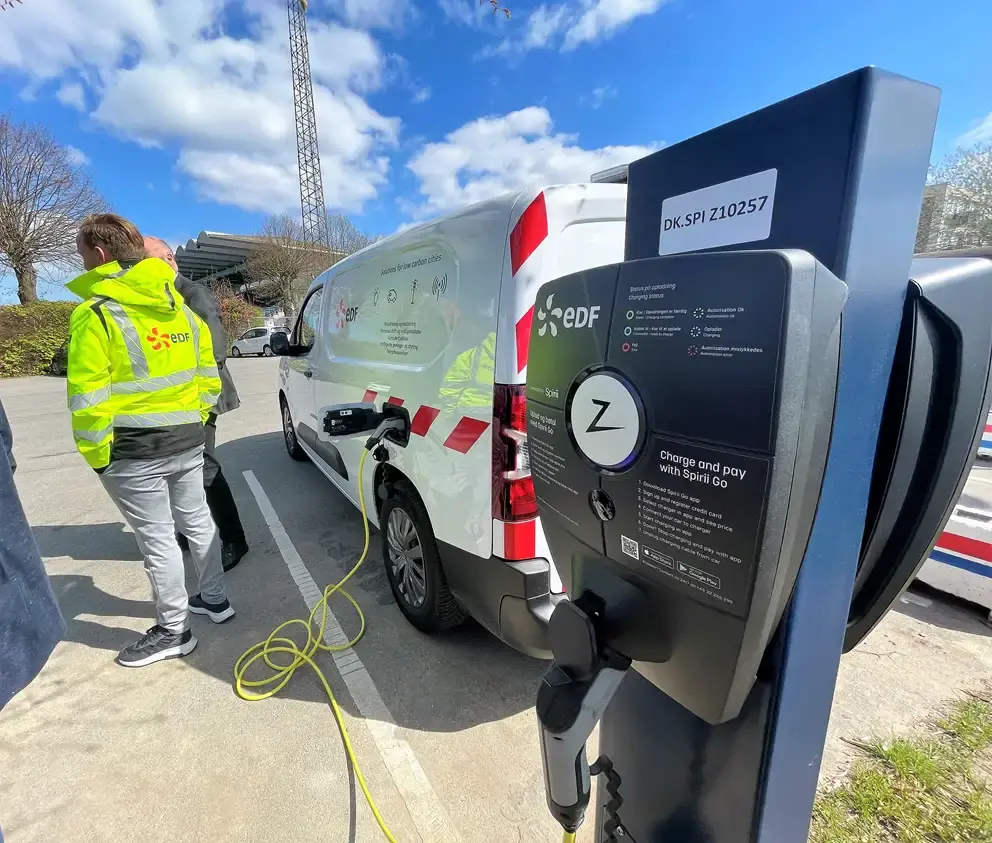
A charging point marked as available is not always a charging point you can use. A petrol car parked in the bay, a driver who finished charging an hour ago but never moved — the system says free, the reality says otherwise.
This gap between digital availability and physical reality is one of the most common frustrations in urban EV charging. For operators like EDF power solutions it also represents an opportunity to improve the charging experience for EV drivers.
The Challenge
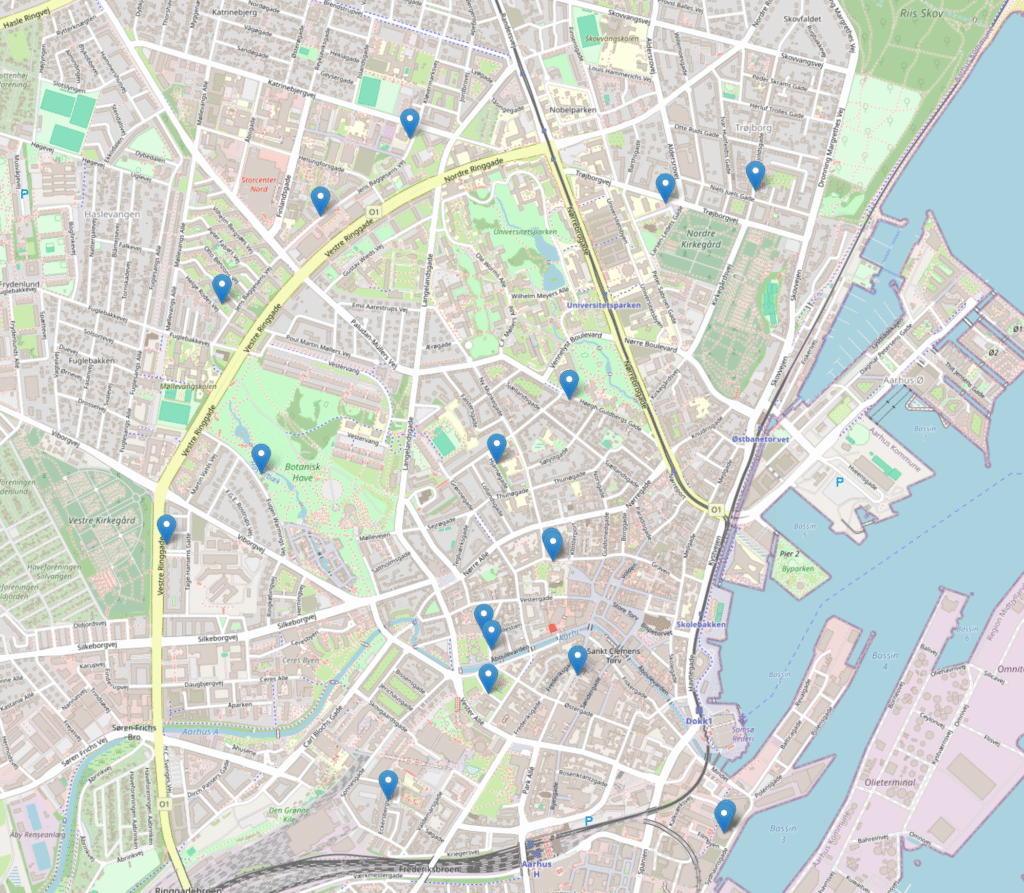
EDF Power Solutions manages a network of public EV charging locations across Aarhus, Denmark’s second-largest city and one of Europe’s most climate-committed municipalities, with a 2030 carbon neutrality target.
A common structural challenge in EV charging plagued the network: availability data was generated solely from charging session activity. If no active session was detected, a chargepoint was logged as free — regardless of whether a vehicle was physically parked there.
This created a persistent mismatch between what drivers saw and what they found on arrival. Without accurate occupancy data, it was equally difficult to understand real demand patterns, identify misuse, or plan infrastructure development with confidence.
The Partnership
To close this gap, EDF power solutions partnered with Sensade, combining EDF power solutions’ charging network expertise with Sensade’s sensor technology and real-world deployment experience across Europe.
The goal was to make availability data better reflect real-world conditions, improving accuracy for EV drivers without adding complexity to the existing setup.
The Solution
Sensade deployed 38 wireless parking sensors across EDF power solutions’ charging locations in Aarhus. Each sensor detects physical occupancy independently of charging activity, transmitting real-time data via NB-IoT with no additional infrastructure required.
Combined with EDF power solutions’ existing charging session data, the sensors can distinguish between a space being actively used for charging and one being blocked by a non-charging vehicle — a distinction invisible to the charging system alone.
Both data streams feed into a Sensade dashboard delivered to Aarhus municipality, providing a unified view of occupancy patterns, charging activity, and illegal parking across every location. The solution is low maintenance, built for outdoor conditions, and can be installed without road works or operational downtime.
The Impact
For EV drivers, availability information now reflects reality — fewer wasted trips and a charging experience that feels reliable rather than unpredictable.
For EDF power solutions, the project delivers genuine operational visibility: the ability to identify blocked spaces, monitor real utilisation, and reduce revenue loss from spaces incorrectly marked as occupied.
For Aarhus municipality, the dashboard gives planners something entirely new — a precise, data-driven understanding of how their charging infrastructure is actually being used, allowing them to answer questions about illegal parking, underutilisation, and future infrastructure needs with evidence rather than estimates.
Built to Scale
This project shows what becomes possible when charging expertise and sensor intelligence are brought together. EDF power solutions contributed the network and the ambition. Sensade contributed the layer of ground truth that strengthens the data.
Together, we have built something that does more than improve the charging experience today. It creates the evidence base for smarter EV infrastructure decisions tomorrow.
The Results
- 38 sensors on 7 EDF charging locations across Aarhus
- Accurate real-time availability data
- Reduced driver frustration
- Improved operational visibility for EDF
- Data-driven foundation for infrastructure planning