

Copenhagen has hundreds of parking spaces reserved for commercial vehicles across the city. To better understand how these spaces were being used, Copenhagen Municipality needed reliable occupancy data from the individual parking spaces.
Sensade provided a sensor-based solution that gives the municipality continuous parking data while also making it easier for commercial drivers to find available spaces.
The challenge
Copenhagen’s commercial parking spaces are reserved for commercial vehicles and are located across the city. Without direct occupancy data from the individual spaces, it was difficult for the municipality to get a consistent picture of how they were being used.
The municipality needed more detailed information about occupancy, arrivals, departures and parking duration to better understand demand and the use of existing capacity.
At the same time, commercial drivers needed an easier way to find available spaces without having to search across different streets and parking areas.
The solution
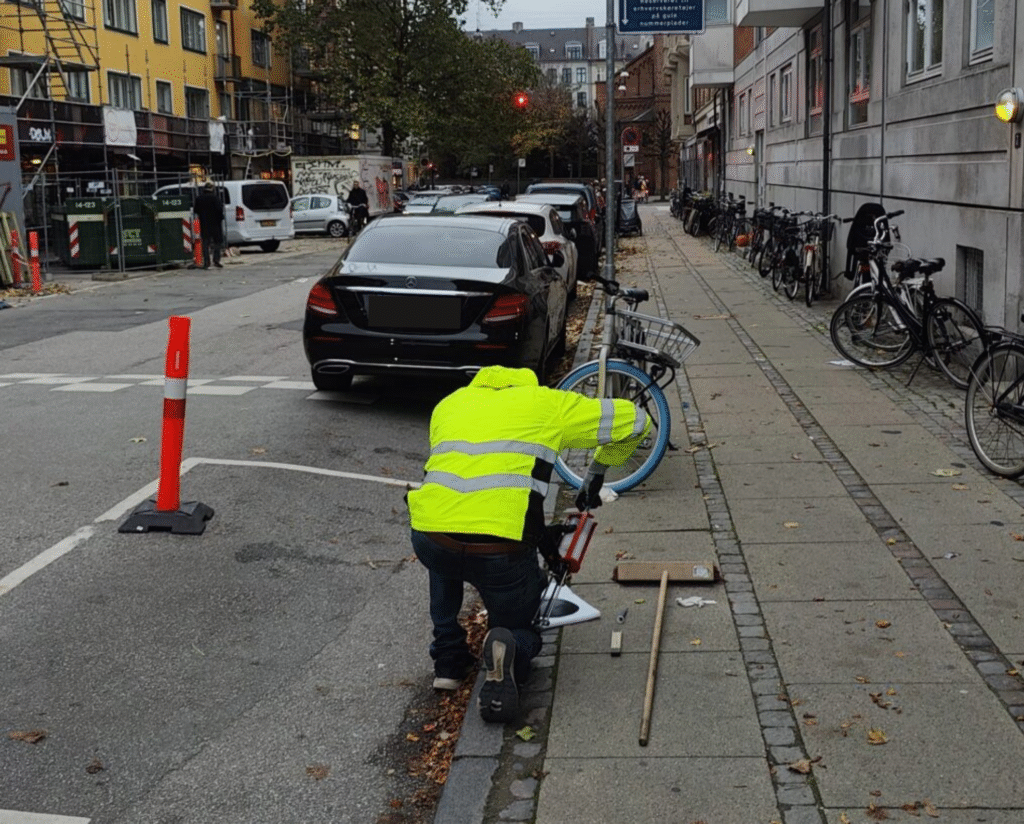
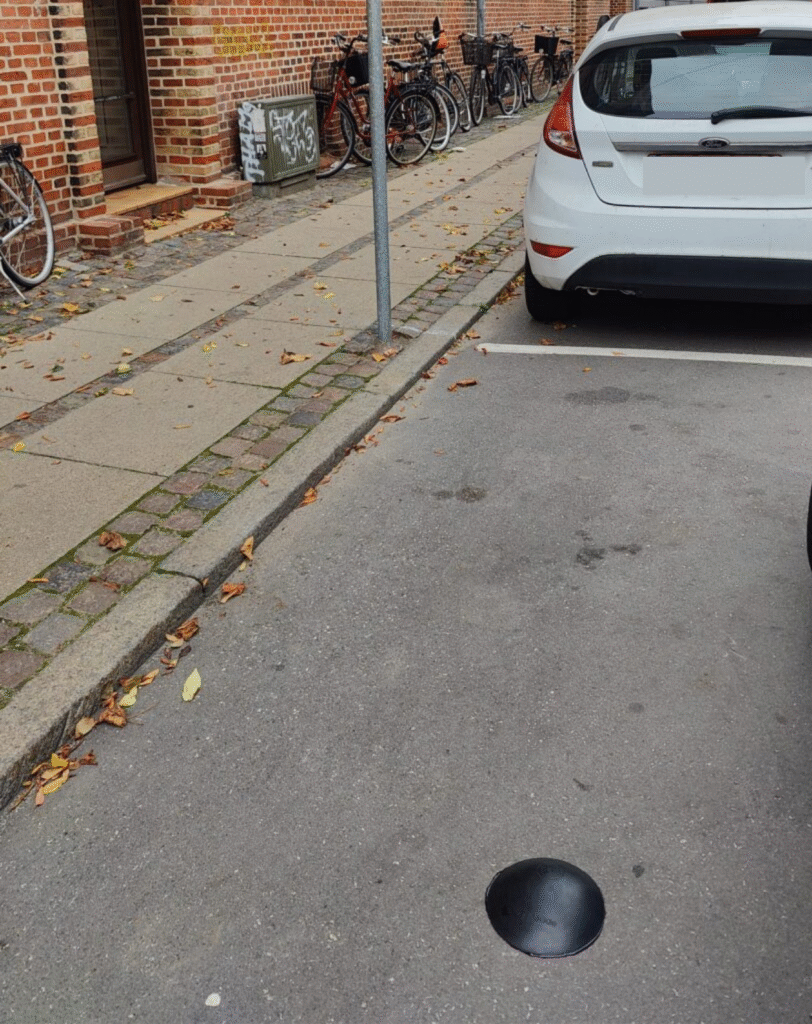
Sensade installed 423 NB-IoT yop-mount sensors across 221 commercial parking areas in Copenhagen. The sensors detect whether individual spaces are available or occupied and continuously transmit occupancy data to the Sensade platform.
Through the Sensade dashboard, Copenhagen Municipality can access current and historical parking data, including occupancy, arrivals, departures and parking duration. The data can be analysed over time and used to identify patterns across individual spaces and parking areas.
Sensade also developed a dedicated app for commercial drivers. The app shows available commercial parking spaces in real time, helping drivers find a suitable space without having to search across the city.
The impact
Copenhagen Municipality now has continuous occupancy data from the commercial parking spaces covered by the project. This provides greater insight into how the spaces are used and makes it easier to identify patterns in demand and utilisation over time.
For commercial drivers, real-time availability in the app makes it easier to see where commercial parking spaces are available before and during their journey. This can reduce unnecessary searching for parking and help drivers reach a suitable space more directly.
The experience from the project has also contributed to Copenhagen Municipality’s plans to expand the use of parking sensors to additional types of parking spaces across the city.
From commercial parking to wider use
Following the experience with sensors on commercial parking spaces, Copenhagen Municipality approved plans in October 2025 to expand the use of parking sensors to additional types of spaces across the city.
The planned expansion includes accessible parking spaces, parking spaces reserved for electric vehicles and car-sharing spaces. This will allow the municipality to collect occupancy data from a broader range of parking spaces and use it for future analysis and planning.
The results
- Real-time occupancy data from commercial parking spaces
- Commercial parking app with real-time availability
- Easier access to available spaces for commercial drivers
- Greater insight into parking patterns and utilisation
- Experience supporting the expansion to additional parking types