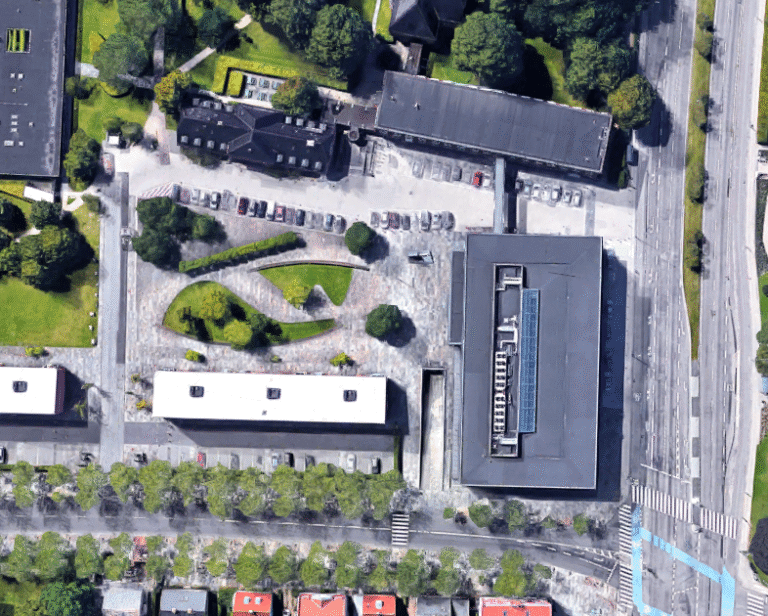
Glostrup Town Hall serves as the connection point between residents and their municipality. It is where people go to deal with civic services, citizen support, and the job centre — visits that depend on being able to park nearby. When the car park is full and drivers have no way of knowing until they arrive, a straightforward errand becomes a frustrating detour.
Glostrup Municipality chose Sensade to solve that problem. The result is a parking facility that works better for everyone who uses it
The Challenge
Parking pressure around the town hall had been building. After nearby train station parking was reduced following a redevelopment, more drivers began using the town hall car park as a convenient base before commuting by rail. Spaces that should have been available for residents visiting civic services were increasingly being taken by long-stay commuters.
When the car park reached capacity, each driver who turned in looking for a space faced a half-kilometre detour before they could try elsewhere. Multiplied across dozens of drivers every day, that added up to a significant amount of unnecessary congestion and wasted time — for residents who simply needed to visit their town hall.
The Solution
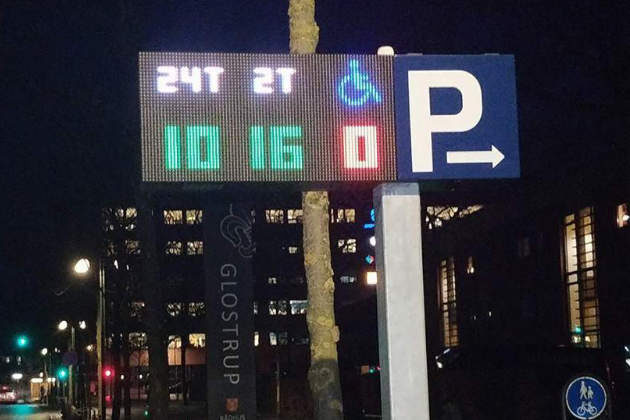
Sensade deployed a smart parking system across the town hall facility, with sensors installed on all spaces including time-restricted and disabled bays. Real-time occupancy data is displayed on digital parking signs at both entrances to the car park, on either side of the road, so drivers can see availability before they commit to turning in.
Clear Overview and Better Flow
The guidance system differentiates between space types — showing availability for standard time-restricted spaces and disabled spaces separately. Drivers arriving at the site get the information they need immediately, without having to enter the car park to find out whether a space is available.
Since installation, the time restrictions on the car park have been adjusted to prevent the facility from being used as long-stay commuter parking. Those changes are managed remotely via the digital parking signs, without any need for physical alterations on site. The adjustment has worked: the car park now serves the purpose it was intended for, and residents visiting the town hall find it significantly easier to park.
What the Data Shows
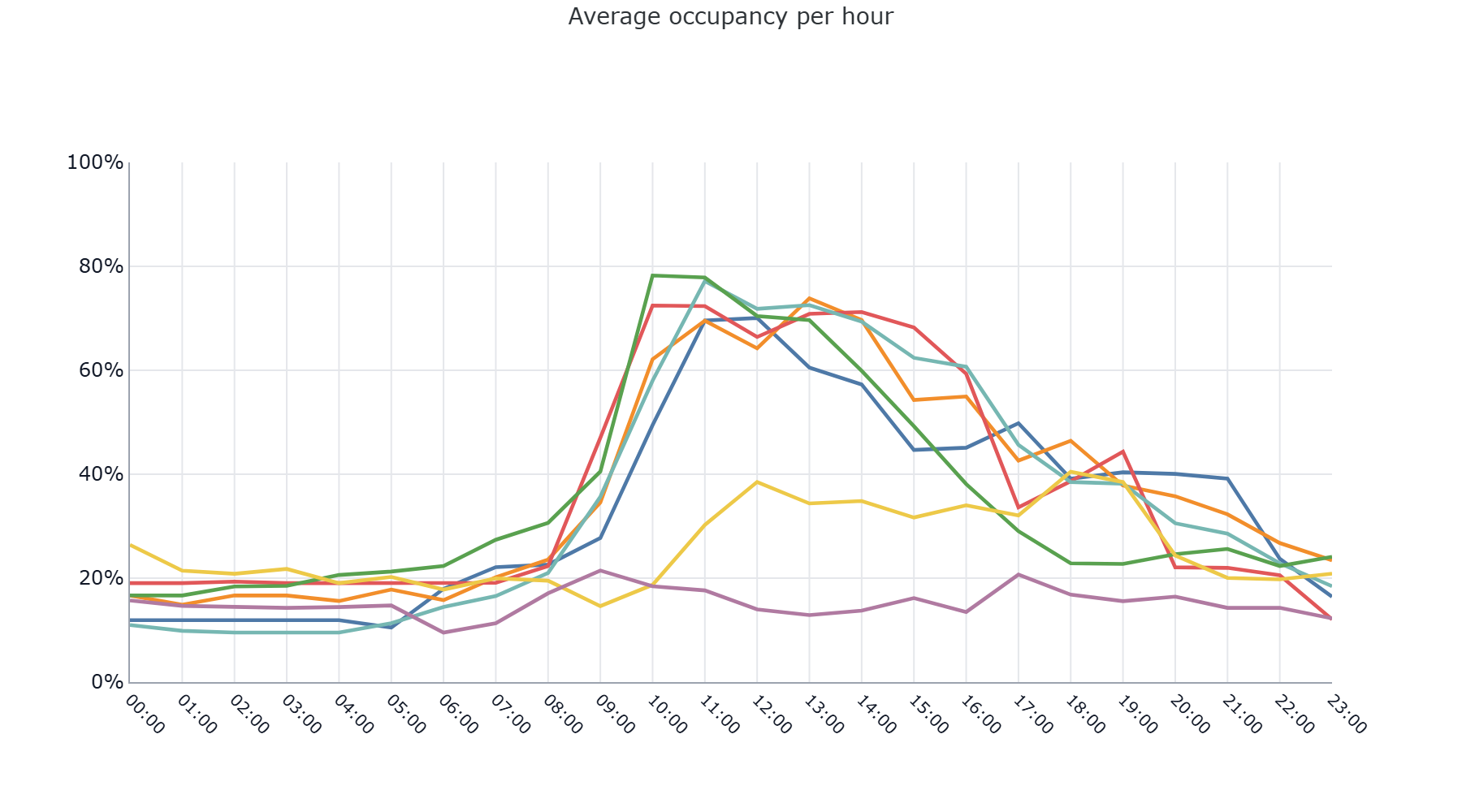
Occupancy data collected over an extended period reveals a clear and consistent pattern. From Monday to Wednesday, the car park fills from around 9am and sees a drop in occupancy around 2pm. On Thursdays, drivers leave around 5pm, and on Fridays around 1pm. There is no significant activity at weekends.
These patterns align precisely with the town hall’s opening hours — Monday to Wednesday 9:30 to 14:00, Thursday 9:30 to 17:30, Friday 9:30 to 13:30, closed at weekends — confirming that the car park is now being used as intended, primarily by residents visiting the town hall, citizen services, and the job centre on site.
The data also gives the municipality a clear tool for ongoing management. When rules change or new pressures emerge, the evidence is there to inform the response.
The Results
- Real-time availability shown on digital displays at both entry points
- Differentiated guidance for time-restricted and disabled spaces
- Remote adjustment of time restrictions via digital parking signs
- Reduced unnecessary circulation
- Integration with Aalborg City app