

Accessible parking plays an important role in making a city easier to navigate for people with reduced mobility. But providing dedicated spaces is only part of the solution. Drivers also need to know where those spaces are and whether they are available.
Košice Municipality wanted to improve access to this information while gaining a better understanding of how accessible parking spaces are used across the city. Sensade’s parking sensors provide both: current availability for drivers and continuous parking data for the municipality.
The challenge
Košice is the second-largest city in Slovakia, with accessible parking spaces distributed across the city. However, without continuous occupancy data, the municipality had limited insight into how these spaces were being used, where demand was highest and whether the existing capacity matched actual needs.
For drivers who rely on accessible parking, there was also no reliable way to know whether a space would be available before arriving at their destination. This could mean having to search for an alternative space after arrival.
Košice therefore needed a solution that could provide drivers with up-to-date information about accessible parking while giving the municipality reliable data for future planning.

The solution
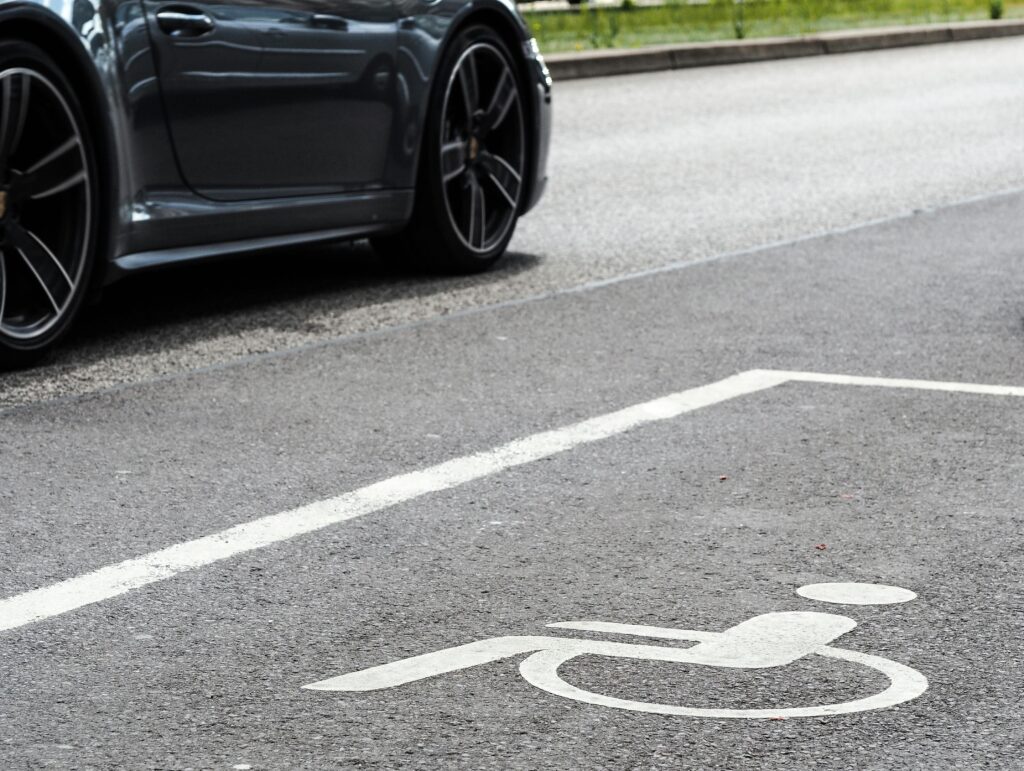
Sensade deployed 150 NB-IoT parking sensors across 53 accessible parking locations in Košice. The sensors continuously register whether individual parking spaces are available or occupied and transmit the data directly to Sensade’s platform. Because the sensors communicate via NB-IoT, the installation did not require additional network infrastructure across the city.
A key part of the solution is its integration with ParkDots, an existing parking app used in Slovakia. Parking availability from Sensade is made available through the app, allowing drivers to see where accessible parking spaces are available before reaching their destination.
Košice Municipality also has access to Sensade’s dashboard, providing an overview of occupancy across the sensor network and allowing parking patterns to be analysed over time.
The impact
Drivers now have access to current information about accessible parking through ParkDots, making it easier to identify an available space before arriving at their destination.
At the same time, the municipality receives continuous data on how accessible parking spaces are used across the 53 locations. This makes it possible to identify areas with consistently high or low occupancy and assess how demand develops over time.
The project therefore provides Košice with a stronger data basis for evaluating its existing accessible parking provision and planning future changes where needed.
From pilot project to future planning
The project provides Košice with both a practical tool for drivers today and a growing source of data for future planning.
By combining parking availability with historical occupancy data, the municipality can monitor how accessible parking is used and use actual parking patterns when assessing future capacity and locations.
The results
- Up-to-date accessible parking availability through ParkDots
- 150 parking sensors across 53 locations
- Continuous occupancy data for accessible parking
- Better data for future accessible parking planning